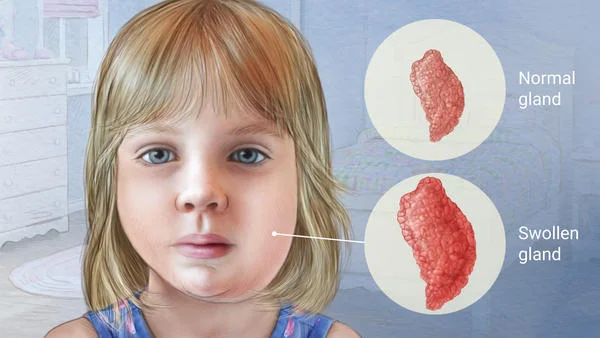
Mumps in Children: Symptoms, Exposure, and When to Seek Care
A vaccine-era family guide to swelling near the jaw and other concerns
MEDICALLY REVIEWED - APPROVED FOR WEBSITE PUBLICATION
This page is for general education only and does not replace individualized medical advice. This resource does not establish a doctor-patient relationship. For questions about your own child, contact your child's current healthcare professional.
Magnolia Pediatrics, Valley Children's Healthcare
2497 E. Herndon Avenue, Suite 101, Clovis, CA 93611 | 559-538-3070
Mumps is a contagious viral infection best known for swelling of salivary glands near the cheeks and jaw. The MMR vaccine makes mumps much less common, but cases and outbreaks can still occur, including in vaccinated people. Jaw or cheek swelling can have several causes, so a clinician should evaluate a child with suspected mumps rather than relying on a photograph or a home diagnosis.
Urgent warning signs - check this first
Call 911 now for severe trouble breathing, blue or gray lips or face, a seizure, a child who is limp or unresponsive, or another life-threatening emergency.
Seek urgent medical evaluation now for severe headache or stiff neck, confusion, repeated vomiting, severe abdominal pain, a child who cannot drink, marked dehydration, testicular pain or swelling, significant trouble swallowing or breathing, or a child who looks very ill.
What families may notice
Puffy or tender swelling in front of, below, or behind one or both ears or along the jaw. Swelling may begin on one side and then involve the other side.
Fever, headache, tiredness, muscle aches, poor appetite, or pain with chewing or swallowing.
Some people with mumps have mild illness or no obvious swelling. Symptoms alone cannot confirm mumps because other viral illnesses, dental problems, lymph-node swelling, and salivary-gland infections can look similar.
What to do if mumps is possible
Contact your child's healthcare professional promptly and call ahead before going to a clinic, urgent care, or emergency department. This helps the facility protect other patients and arrange appropriate testing.
Keep the child home and away from close-contact activities until the clinician or public-health authority provides instructions. Isolation and return-to-school recommendations can differ during an outbreak.
Tell the clinician about MMR vaccine history, known exposure, travel, school or team outbreaks, the date swelling began, and other symptoms.
Do not share drinks, utensils, cups, water bottles, lip balm, or foods that have touched the mouth while a contagious illness is possible.
Comfort care while arranging advice
Offer fluids, soft foods, rest, and comfort measures. Sour foods or drinks may make salivary-gland pain worse for some children.
Use fever or discomfort medicine only as directed by your child's clinician or the product label for the child's age and weight. Do not give aspirin to children or teenagers unless a clinician specifically directs it.
There is no routine antiviral medicine that treats mumps. Antibiotics do not treat mumps unless a clinician identifies a separate bacterial infection.
When to contact your child's healthcare professional
New jaw, cheek, or neck swelling, especially with fever, pain, illness exposure, or a local outbreak.
Symptoms are worsening, fever persists or returns, swelling becomes very red or warm, or the child is not drinking or urinating normally.
You are unsure whether the child is fully vaccinated against mumps or has had a close exposure. The clinician or local public-health authority can advise about individual next steps.
Related topics on this website
Sources and medical review
Sources checked: August 15, 2026 | Medical review completed: August 15, 2026