Pediatric Automations vs Pediatric AI Agents:
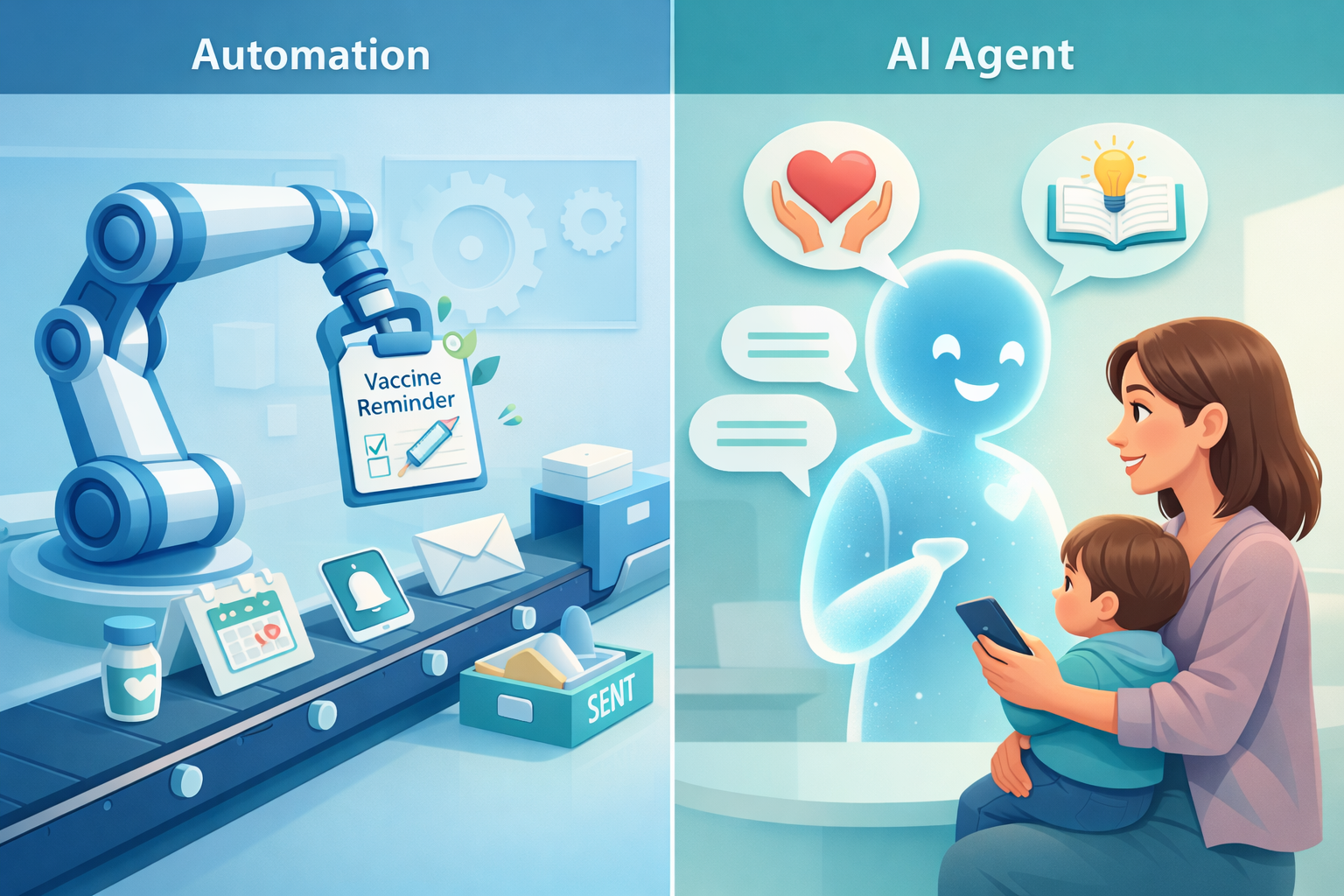
What is a pediatric automation?
A pediatric automation is a rule-based process that runs the same way every time. It follows predefined instructions and does not make independent decisions or adapt to new situations.
In practical terms, an automation answers the question: “When X happens, what should the system do?”
Key characteristics
Triggered by a specific event or schedule
Uses fixed rules and workflows
No reasoning or judgment
Predictable and consistent output
Simple pediatric example (automation)
When a child turns 11 years old, the system automatically:
Sends a reminder email to parents about the upcoming Tdap, HPV, and meningococcal vaccines
Flags the chart in the EHR
Adds a task for front-office staff to mention vaccines at check-in
This process is helpful, efficient, and reliable, but it cannot explain why the vaccines matter or adapt the message based on parental concerns.
What is a pediatric AI agent?
A pediatric AI agent is a goal-directed system that can reason, adapt, and take context into account. It can interpret information, decide what to do next, and interact conversationally with users.
In practical terms, an agent answers the question: “Given this situation, what is the best next step?”
Key characteristics
Works toward an objective rather than a fixed rule
Uses context, judgment, and reasoning
Can interact with families or staff in natural language
May choose different actions in different situations
Simple pediatric example (AI agent)
A parent asks on your website:
“My 11-year-old is due for vaccines, but I’m worried about side effects.”
The pediatric AI agent:
Identifies the child’s age and relevant vaccines
Explains benefits and common side effects in plain language
Acknowledges parental concerns empathetically
Suggestions for credible AAP-aligned resources
Recommendations discussing specific concerns with the pediatrician
Offers to generate a visit checklist or questions for the appointment
The agent adapts its response based on the question, tone, and context, something an automation cannot do.
One-sentence comparison for your website
A pediatric automation follows instructions, while a pediatric AI agent understands context and helps decide what to do next.
When practices typically use each
Automations are best for reminders, scheduling, billing notices, form delivery, and routine workflows.
AI agents are best for education, triage guidance, family engagement, policy explanation, and personalized support.